

In the dynamic landscape of telecommunications, the selection of appropriate components is crucial for ensuring the reliability and efficiency of equipment. One such component that often sparks debate is the lead wire clamp. As a supplier of lead wire clamps, I am frequently asked whether these clamps can be used in telecommunications equipment. In this blog post, I will delve into this question, exploring the suitability of lead wire clamps in telecommunications, their benefits, and potential applications.
Understanding Lead Wire Clamps
Lead wire clamps are mechanical devices designed to secure and manage wires, cables, and leads. They come in various shapes, sizes, and materials, each tailored to specific applications. These clamps are commonly used in electrical and electronic systems to prevent wire movement, reduce stress on connections, and ensure proper routing of cables. They can be made from materials such as plastic, metal, or rubber, depending on the requirements of the application.
Suitability of Lead Wire Clamps in Telecommunications
Telecommunications equipment encompasses a wide range of devices, including routers, switches, servers, and fiber optic systems. These devices rely on a complex network of wires and cables to transmit data, voice, and video signals. The use of lead wire clamps in telecommunications equipment can offer several advantages:
1. Cable Management
Effective cable management is essential in telecommunications to prevent signal interference, reduce the risk of damage to cables, and facilitate maintenance and troubleshooting. Lead wire clamps help organize cables by keeping them in place and preventing them from tangling or becoming loose. This improves the overall reliability of the telecommunications system and reduces the likelihood of downtime.
2. Protection of Wires and Cables
Telecommunications cables are often exposed to various environmental factors, such as vibrations, temperature changes, and mechanical stress. Lead wire clamps provide additional support and protection to these cables, preventing them from being damaged due to movement or external forces. This helps extend the lifespan of the cables and ensures the long-term performance of the telecommunications equipment.
3. Signal Integrity
In telecommunications, maintaining signal integrity is crucial for ensuring the accurate transmission of data. Loose or poorly managed cables can cause signal loss, interference, and degradation, leading to reduced performance and reliability. Lead wire clamps help keep cables in the correct position, minimizing the risk of signal disruption and ensuring optimal signal quality.
4. Ease of Installation and Maintenance
Lead wire clamps are relatively easy to install and can be quickly adjusted or replaced as needed. This makes them a convenient solution for telecommunications equipment, where frequent changes or upgrades may be required. Additionally, the use of lead wire clamps simplifies maintenance procedures by making it easier to access and identify cables.
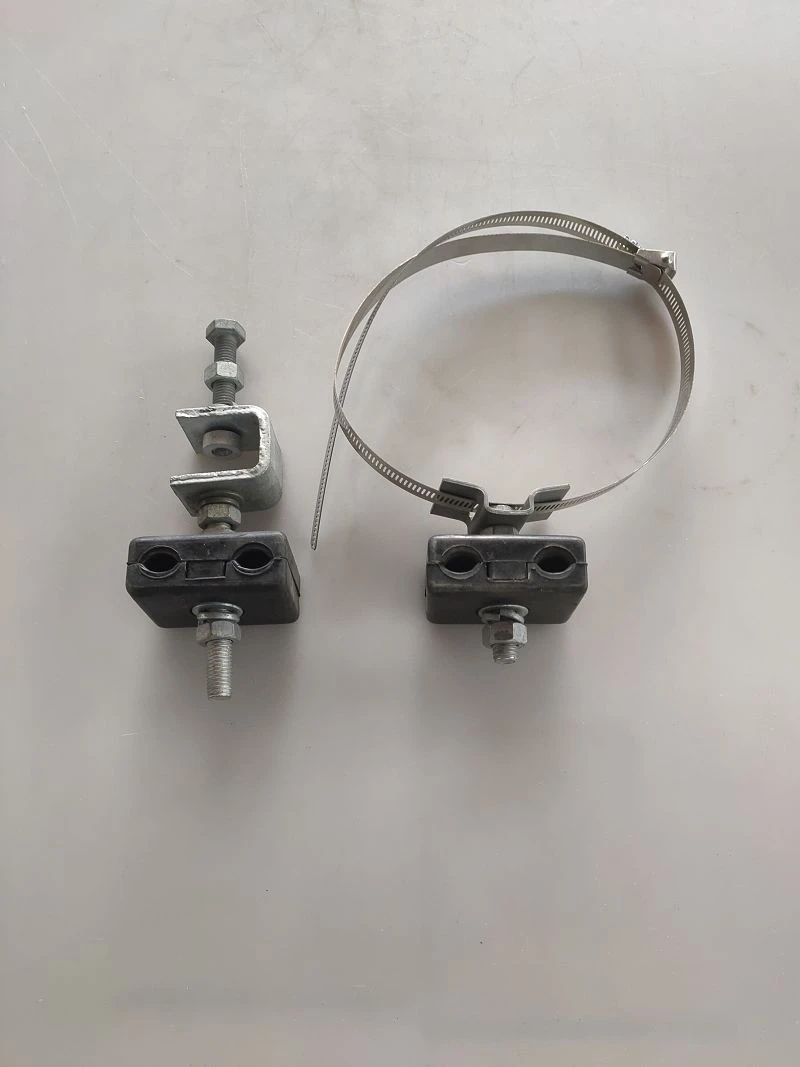

Types of Lead Wire Clamps for Telecommunications
There are several types of lead wire clamps that are suitable for use in telecommunications equipment. Some of the most common types include:
1. Pull Down Retaining Clamp
The Pull Down Retaining Clamp is designed to secure cables in a vertical or horizontal position. It features a strong grip that prevents cables from slipping or moving, even under high tension. This type of clamp is commonly used in telecommunications cabinets, racks, and enclosures to manage cables and ensure proper routing.
2. ADSS Rod with Lead Clamp
The ADSS Rod with Lead Clamp is specifically designed for use with All-Dielectric Self-Supporting (ADSS) cables. These cables are commonly used in telecommunications networks for overhead installations. The lead clamp provides a secure connection between the ADSS cable and the supporting rod, ensuring the stability and reliability of the cable.
3. Lead Clamp for OPGW Tower
The Lead Clamp for OPGW Tower is used to secure Optical Ground Wire (OPGW) cables to towers in telecommunications networks. OPGW cables are used to transmit both electrical power and optical signals, making them an important component of modern telecommunications infrastructure. The lead clamp provides a reliable connection between the OPGW cable and the tower, protecting the cable from damage and ensuring the efficient transmission of signals.
Applications of Lead Wire Clamps in Telecommunications
Lead wire clamps can be used in a variety of telecommunications applications, including:
1. Data Centers
Data centers house a large number of servers, switches, and other telecommunications equipment. The use of lead wire clamps in data centers helps manage the extensive network of cables, ensuring efficient operation and reducing the risk of downtime. These clamps can be used to secure power cables, network cables, and fiber optic cables, keeping them organized and protected.
2. Telecommunications Racks and Cabinets
Telecommunications racks and cabinets are used to house and organize telecommunications equipment. Lead wire clamps are essential for cable management in these racks and cabinets, ensuring that cables are properly routed and secured. This helps improve the airflow within the racks and cabinets, reducing the risk of overheating and improving the overall performance of the equipment.
3. Fiber Optic Networks
Fiber optic networks are the backbone of modern telecommunications, providing high-speed data transmission over long distances. Lead wire clamps are used in fiber optic networks to secure fiber optic cables, protect them from damage, and ensure proper alignment. This helps maintain the integrity of the fiber optic signals and ensures the reliable operation of the network.
4. Wireless Communication Systems
Wireless communication systems, such as cellular networks and Wi-Fi networks, rely on a network of antennas and cables to transmit and receive signals. Lead wire clamps are used to secure the cables and antennas, ensuring their stability and reliability. This helps improve the signal strength and coverage of the wireless communication system.
Conclusion
In conclusion, lead wire clamps can be effectively used in telecommunications equipment to improve cable management, protect wires and cables, maintain signal integrity, and facilitate installation and maintenance. With a variety of types available, including Pull Down Retaining Clamp, ADSS Rod with Lead Clamp, and Lead Clamp for OPGW Tower, there is a suitable lead wire clamp for every telecommunications application.
If you are in the telecommunications industry and are looking for high-quality lead wire clamps, I invite you to reach out to us. We are a trusted supplier of lead wire clamps, offering a wide range of products to meet your specific needs. Contact us to discuss your requirements and explore how our lead wire clamps can enhance the performance and reliability of your telecommunications equipment.
References
- Telecommunications Industry Association (TIA) standards for cable management.
- Institute of Electrical and Electronics Engineers (IEEE) guidelines for signal integrity in telecommunications.
- Manufacturer's specifications for lead wire clamps.